I had the tremendous opportunity to participate in Ironman Wisconsin this year. What an incredible event with great preparation and supportive people. It’s been five years since my last time racing the event and I was thrilled to participate. In this race report I’ll walk through all the things you need to know about racing Ironman Wisconsin and talk through my experience as I was preparing.
About Me
So, a little about me. I’m a 44 year old, male, athlete who had previously done Ironman Wisconsin twice, so this was my third time. I’m a husband, a father of 9 awesome kids, and the Chief Technology Officer of a successful technology consulting firm. The choice to do Ironman this year was partially driven by a desire for a challenge, partially driven by the need for a release, and finally a need to trust. You go through periods of life where you need to trust in the providence of God and doing something like this was an opportunity to do so. In my office is a quote on the wall… “in every season, in every place, in every emergency prayer”. The opportunity to train and participate in something like this is nothing if it isn’t also an opportunity for prayer in trust. That’s exactly what it was and in retrospect, exactly what I needed at this point in life. I’m super thankful for my wife giving me the opportunity to do something like this. It was quite a gift to have her permission and encouragement.
Overview of Ironman Wisconsin
The first thing to know about Ironman Wisconsin is that it is one of the best locations for a 140.6 race, with usually perfect temperatures, epic crowd support, and a challenging (but fair) course. Here’s the official ledger, but we’ll break this down later:

Ok, one thing to look at here, “why does the airport say MSN?”. Look, it’s in Madison, but more than likely you’ll be flying into Milwaukee or even Chicago if you are looking for cheaper tickets. Or, you’re just driving. Make sure to check around on those flights.

Training Load
I am not a professional triathlete or even a Top 25 finisher, but I have worked hard to establish a training approach that maximizes my family time, respects my very busy work schedule, while having a reasonable training load. My training worked out to about 3 – 4 runs a week, 3 – 4 bikes a week, and 3 – 4 swims a week, with some days obviously having multiple modalities, but rarely doing “brick” sessions. I focused on doing activities well charged and resting between.
I typically work out every day, regardless of whether I’m training for an Ironman or not. This year I was feeling a desire to challenge myself, but I also was dealing with a bit of an nagging injury and was curious how long it would take to resolve. I got to a point where I was feeling great and started to ramp up training, but not yet truly at an Ironman level. At some point in that training journey I got enough confidence that I had the runway to do an Ironman. I believe the words to my wife were, “I want to do something difficult”, as the sprint triathlons were not inspiring me this year. In another sense I knew I was going through a period of life where I wanted to take on the work and achieve something. Thankfully my awesome wife said, “yes” and I took the next three months to prepare.
So, for training I knew I wanted to do better in the swim. I’ve been working on my swim stroke and consistency for a while, but this was a great opportunity to truly put that to the test. I swam consistently 4 days a week, mostly in an inland lake or in Lake Michigan. The benefit of this for me was that it was consistently inconsistent. Especially swimming in Lake Michigan gave me a real confidence that no condition was too much for me. The inland lakes I swam in were on my way home, or within easy run distance from the house, so I could just take my swim buoy with me. I know many like the consistency and measurability of the pool, but swimming outdoors has really made me enjoy swimming, vs. see it as a chore. I was confident I had improved, but this was going to be a test of how much.
For running I had a consistent schedule of 3 – 4 runs a week, with a usual “long run” on the weekends. The majority of runs were 6 – 7 miles, but the longest “long run” was about 16, which is consistent with how I’ve trained before. I felt good and near the end I somewhat dialed down the running in favor of more biking. I’m not sure if that netted negatively or not, but I think the prioritization was right.
For biking I did a fair amount of indoor biking over the winter, but as soon as I could hit the pavement I was out on the road. I would typically bike 2 hours per ride during the week and then a longer 4 – 5 hour ride over the weekend. This made my longest ride prior to the Ironman about 80 miles, which I was able to fit into a busy schedule and work/family demands.
For training nutrition I generally just ate normally, just a lot more of it. The exception was my longer bike rides, where I would practice race nutrition, for which I brought EFS Pro liquid drink and additional bars, such as cliff bars and other products.
So, for all the training I always have a natural point before the race where I say, “I didn’t train enough” and doubted myself. Even though I knew I was in the best swim shape of my life I still didn’t trust the work I had put in there. I knew however that I did the best I could and I’d need to pace myself consistent with that training and not try to be someone that I wasn’t.
Signing Up
The first thing you need to know is that Ironman Wisconsin often sells out of its normal tickets, so try to sign up reasonably early if you don’t want to be paying for the more expensive tiers. The cost has gotten a bit more expensive as time has gone on, but make sure to sign up and then commit. There is an ability to move your race to a future year, but my recommendation is once you sign up, don’t expect to back out. Make your plan and execute your plan.
Here’s the sign-up page for Ironman Wisconsin.
Getting a Hotel
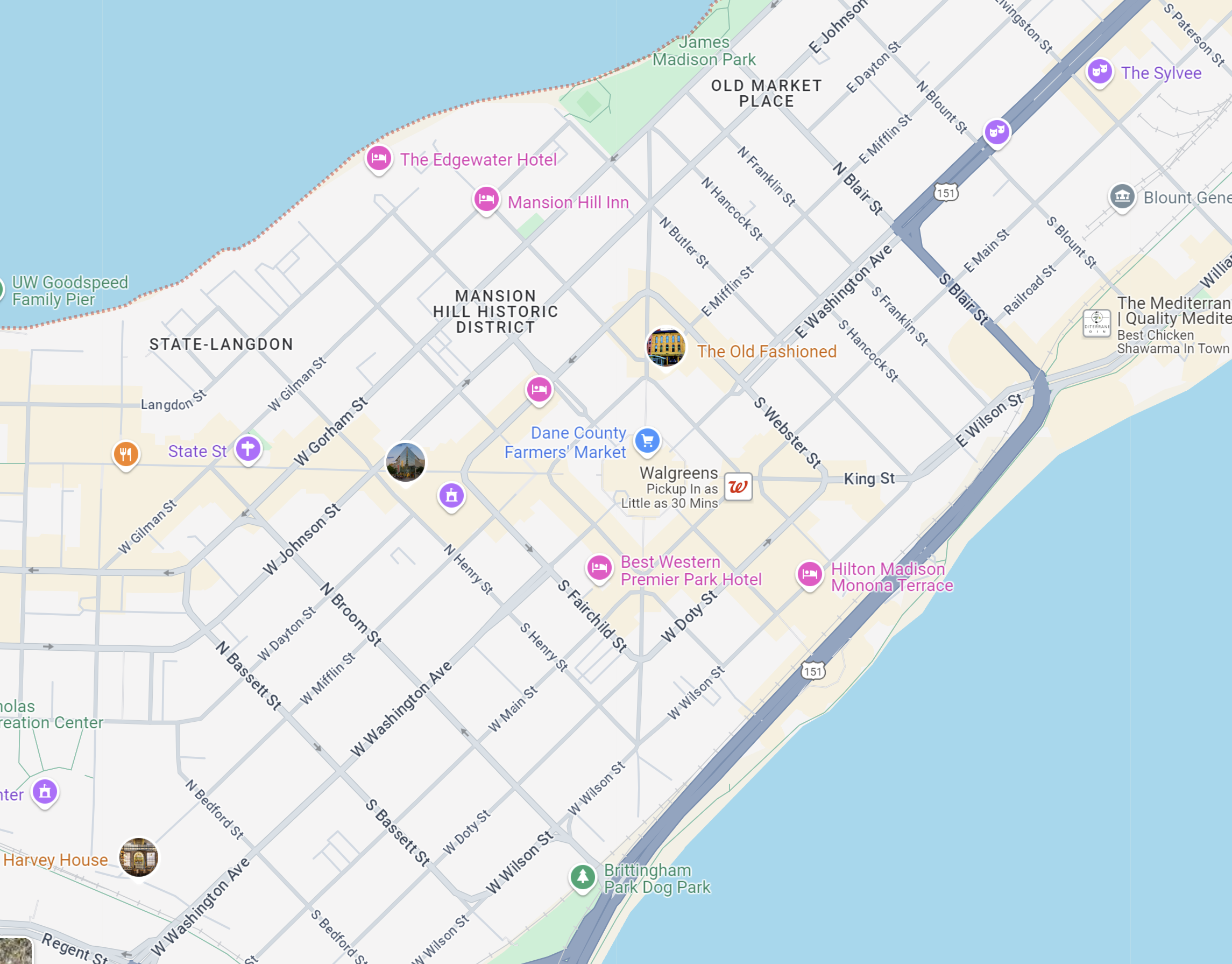
You’ll want to ideally get a hotel that is within walking distance of the finish line and these sell out fairly quickly as well. I almost booked my room for the wrong weekend… so be careful when selecting those dates! If you pick a hotel within walking distance your pre-race and post-race will be a lot less stressful and a lot less painful (in the case of the walk back to the hotel). Secure this when you secure your tickets, or shortly thereafter to avoid high prices or a letdown later on. The general area to look at is below, but try to get as close to the capitol as you can.
Race Weekend
So, let’s talk about Race Weekend. Here is the athlete guide for the 2024 Ironman Wisconsin, which likely will be similar to the athlete guide for future years, but you’ll need to keep an eye on it. Here is the typical agenda for Ironman Wisconsin, between Friday, Saturday, and Sunday… but you should check the most recent athlete guide to check for sure. Make sure to enjoy yourself checking in and browsing the various vendors and cool stuff. That said, don’t plan to use anything different than you did in training. There are loads of stories of people who have screwed themselves up by using something different than training.
Thursday, Friday, Saturday:

More Saturday and Sunday:

Race Packet Pickup and Packing
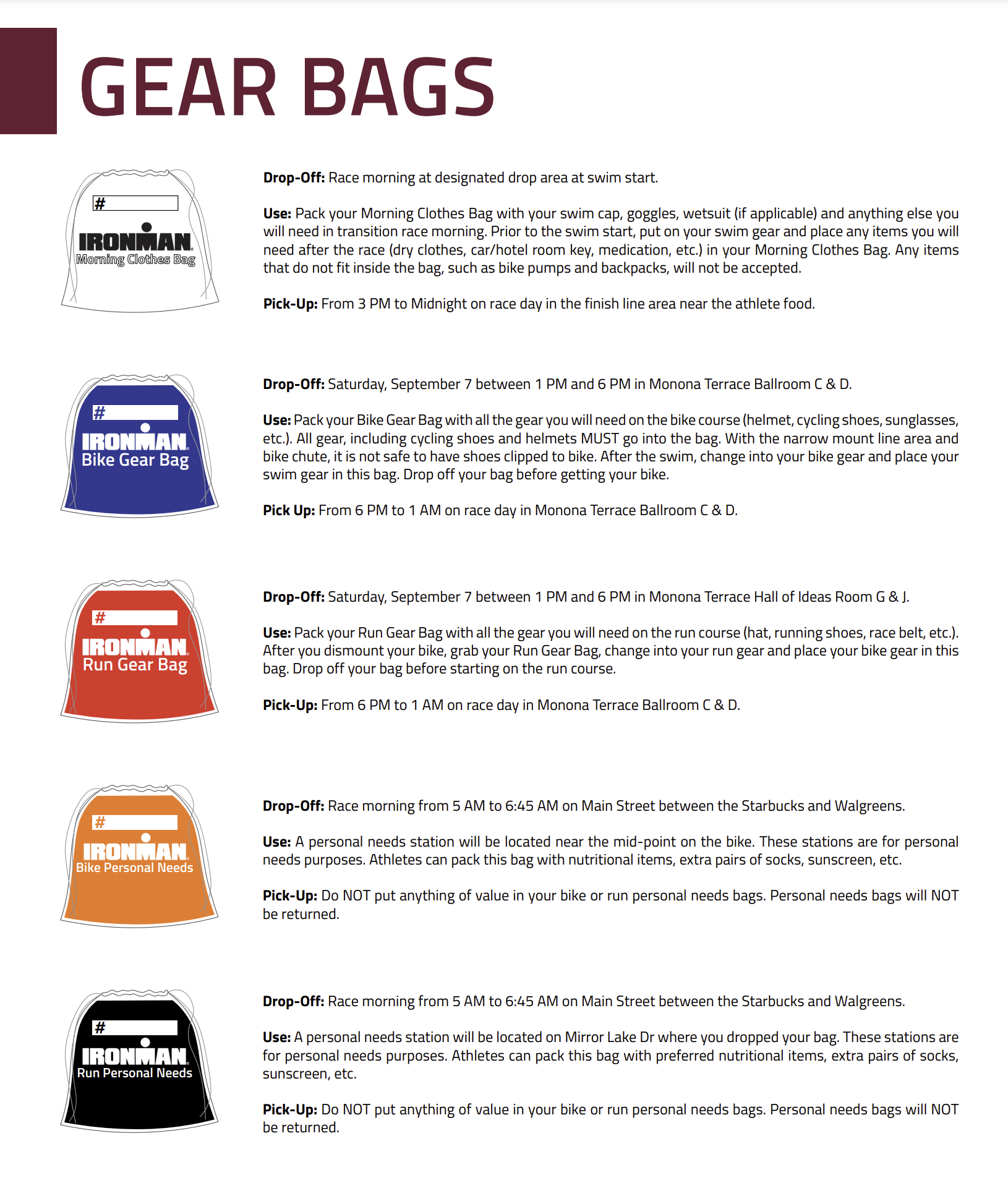
The first thing to know is you’ll need to pick up your race packet and bags. The bags will be labeled with each transition, the morning clothes bag, and the special needs bag. Understand that you will not get back the contents of the special needs bag, so don’t put anything in there you want back. You’ll want to evaluate the contents of those bags based on the weather profile of the weekend. In most cases the weather for Ironman Wisconsin is 60s to 70s with potential of rain and some wind. In rare cases it can be hot and humid, or cold and rainy. Either of those two extremes will require you to pack clothes to keep you warm or ways to keep you from overheating. Select your race kit carefully and prepare in advance by testing your clothing in your training activities.
A bit more about check-in. It will go pretty fast. You need to bring your ID and have your QR code ready that you got when you signed up. It doesn’t take too long if you have that ready. You’ll get a wrist band applied that will be with you through the weekend.
Get in a Swim Familiarization
I highly recommend using the opportunity on Friday to do a bit of swim familiarization. For me it was a really nice way to make myself comfortable and get the butterflies out. You can easily walk over to swim start and take a lap as far as you want to go. The turn buoys will be present on Friday, so it’s easy to check out the course and get a feel for the water, the temperature, and get yourself ready. The easiest place to get in is the actual swim start area, which is near the boat ski jump. My suggestion is to swim out toward the first turn buoy, then go as far as you are comfortable, then choosing to turn and swim back against near the Terrace. This will get you comfortable with the direction of the swim, sighting the buoys, and the algae and such that is in the water. For me, I always sort of “freak out” when I see the distance of the swim, but after I do a practice swim I moved to “I’ve got this”.
Validating Race Day Nutrition
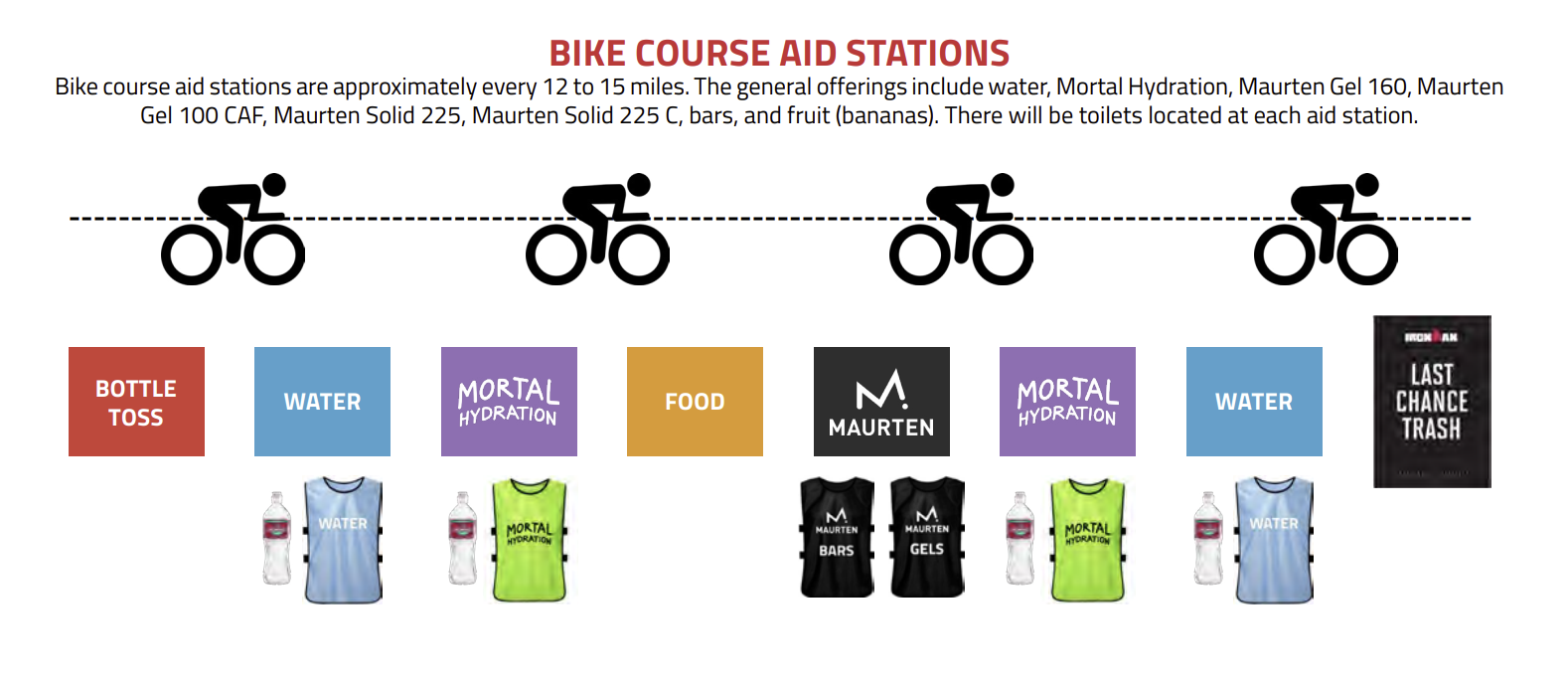
An important thing to check in the athlete guide will be the nutrition that they offer on the course. Even if you are intending to pack most of the nutrition with you, understanding the nutrition offered and the contents is important. For instance, in the 2024 Ironman Wisconsin, the race liquid did not contain carbs and was just electrolytes, salt, and flavor. I could have made the assumption (wrongly) that it contained carbs and was just like the EFS pro I was bringing along. So, check this out and preferably, bring as much nutrition that you are comfortable with along. I’ll talk about this later, but in retrospect I totally underhydrated in the race, so be prepared to drink, drink, and drink.
Saturday Check In:
The check-in activities on Saturday mostly include you dropping off your bags in the required spots (you’ll just follow the signs in the terrace) and then delivering your bike. To get to the bike spot you need to go down the stairs and go through the bike gate, where they will check you in. You’ll place your bike at your number in the appropriate way. Remember that your bags contain all your transition stuff. The bike spot is just the bike. I’ll note this twice, but don’t worry about bringing a bike pump along. There are plenty of bike pumps on race-day morning and even a pit crew of sorts that has them.
You can see here an overhead of the bike racking area. It’s actually about twice as large as this, since I”m standing on the bridge that overlooks both sides.
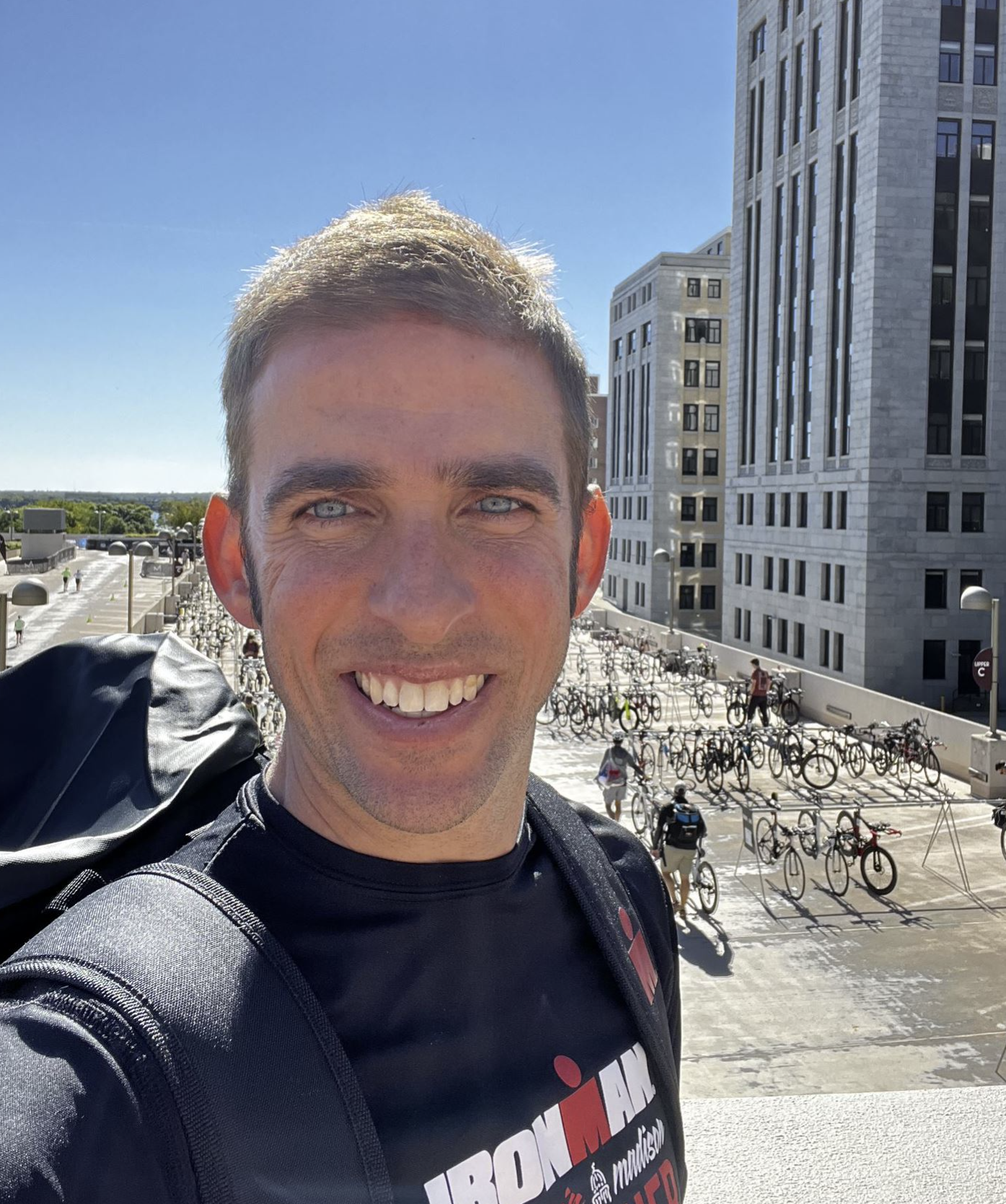
Here is a bit of a close-up of the racking setup. If you’ve done a triathlon before (as you surely have), it will look super familiar. This should make you feel pretty comfortable. They do want it racked exactly this way, so don’t flip it or do something different.

Post-Check-In Activities
I’d suggest your check-in should be done by 2:00 or so. At that point you’ll want to make sure you’re all set with your hotel and able to relax the night before. As a Catholic, I wanted to find a Mass and Confession before the big race and that easily existed at Blessed Sacrament Parish, close to downtown. You’ll need to drive there though, as it’s not super easy walking from the areas where the hotels are. In the past the Cathedral was open and closer, but there is construction going on with that. A word for the wise though… there was a Badger game finishing right after Mass, so plan accordingly depending on where you are trying to go in the evening. You’ll easily get stuck in 45 minutes of Badger traffic, which can be annoying if you were trying to get somewhere else.
So, for dinner, I always like a Pizza. There are plenty of great places, such as Lucille. This time I headed to for Salvatore’s Tomatoe Pies, which was also great. I ended up getting a large pizza and then keeping half of it to eat after the race or the next day. That was a wise decision.

Ok, now get yourself to your room, get to bed, and set your alarm for 5:00 the next morning. You might have the jitters, you might have trouble sleeping, and you might feel odd aches and pains. This is normal. Your body will try to trick you the night before. I remember before a previous Ironman I had some indigestion and thought I was getting sick. I also don’t think it is necessary to get up earlier than 5:00 if you are within easy walking distance. Again, your body will play tricks on you. You’ll be fine.
Race Day Morning
So, as I said, set your alarm for 5:00 the next morning. Honestly, you don’t need to get up earlier than that, unless you really, really, want to. You’ll mostly just spend time standing around and freaking yourself out. Get up, eat your breakfast, and dress warm. It will be colder than you think in the morning. I had a morning in Madison where I didn’t bring extra morning clothes and very much regretted it. This time I was wearing even more than I thought I needed, understanding that I can just drop it into the morning clothes bag. Do not forget your morning clothes bag and make sure you have labeled it.
For morning nutrition I did the following:
- Bagel with peanut butter
- Coffee
- Salt tablets
- EFS Pro before I left the hotel
- EFS Pro to sip on before the swim (disposable)
Walk Over and Get Your Bike Ready
After eating I walked over to the Monona Terrace and you will see everyone milling about. Your first task will be to go pump up your bike. I’d just head there immediately, find your bike, and pump it up to the desired pressure. There are two ways to do this, (1) borrow a pump from your neighbor or (2) go to the bike people who are pumping up bikes. Neither of these requires you to bring your own pump, so don’t do it. There will be plenty around. It’s also a good time to give your bike a check-over and if there are any major problems take it to the bike people. They can fix minor problems or give you a satisfaction if you are freaking out on something minor. There are stations to get water for your water bottles but I just filled them up before. I didn’t want to be messing around with that on race morning.
Prepare and Go to Shore
After you have finished with the bike preparation you just need to get down to the shore. A few things to know… gauge how long you want to wait inside until you put your wetsuit on. I elected to use the bathroom inside and then put my wetsuit on with. I ultimately intended to get down to the shore with about 30-40 minutes until start time. That was pretty appropriate. If it was colder, I might have waited longer to do that. I personally prefer to get the wetsuit on inside vs. do it in the cold outside. After you have gone to the shore there will be a person collecting your morning clothes. If you didn’t bring your morning clothes bag you’ll be in trouble, so hopefully you brought it down with you.
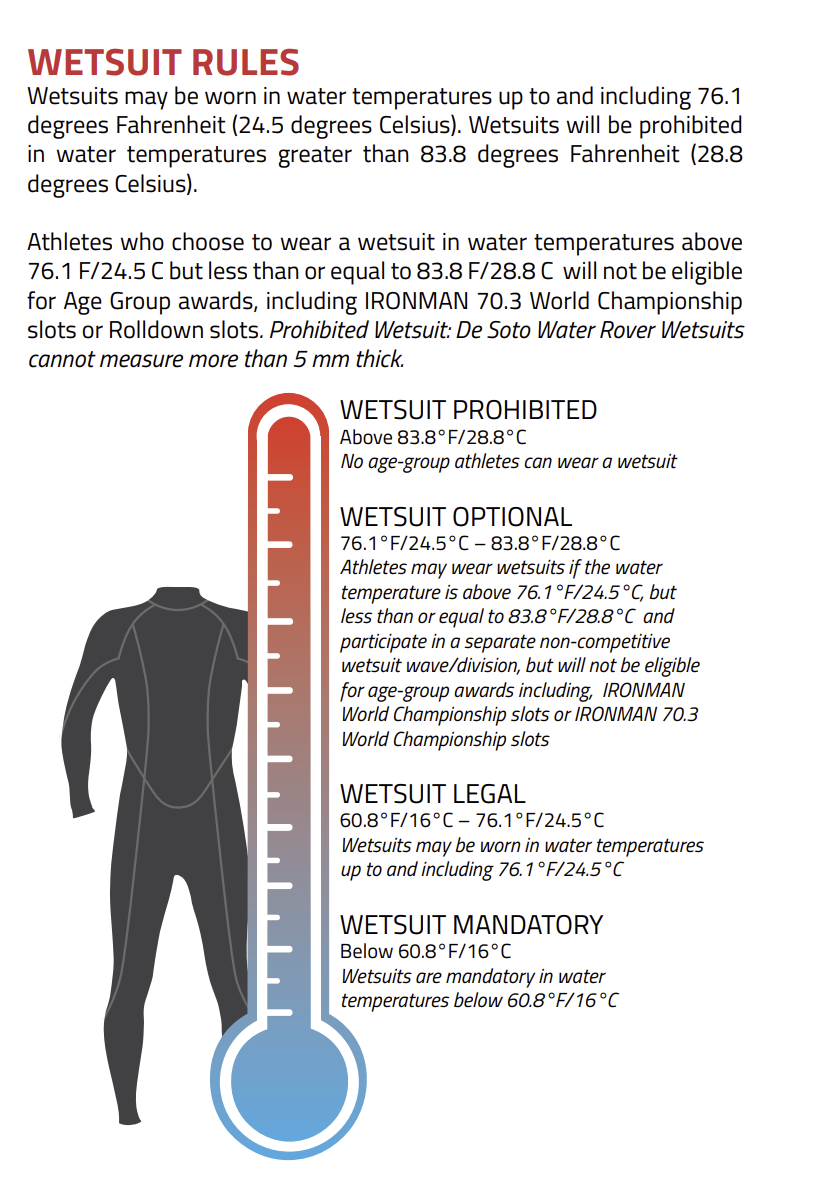
Here are the wetsuit rules for Ironman Wisconsin (typically):
The layout of the course and the line-up area is below:

You’ll then notice people starting to get lined up. The line up will have signs for your relative timeline for the swim. Around the same time you’ll hear that swim warm-up time is open. There are some that like this and some that don’t. I personally don’t prefer to do a swim warm-up on race day morning, but that’s just me. Do what will be the best preparation for you, but know that there is time to do that if you wish. After that… get in line and pick a time that is appropriate for you. Know that there is no advantage or disadvantage of a particular time, with exception of those that go very early in the front and can keep pace (more on that later). You’ll still have the full time to finish.
Swim Start
So, now we get to the actual swim start. You’ll have already lined up in your target area and they will let people into the water in groups. It will take around 20 – 30 minutes for everyone to get into the water, but you’ll get there. You’ll notice the obvious problem that the faster swimmers will lap the slower swimmers just because of the seeding process (more on this later). As you get closer to getting into the water you’ll get your goggles on, etc. and just get ready to rock. Take a deep breath… you’ll make it. This is where you’re prep swim will feel great, because you will have already done this exact part of the swim.
The Swim
Ok, so finally for the swim itself. You likely already know it will be a two loop swim. I wasn’t quite sure how I’d feel about that frankly, as the last times I did Ironman it was a single loop. The first turn is right in front of you, so just swim right for it and try to stay close to the line. The wind that morning was pretty light, but was picking up as the day went on. I absolutely noticed immediately the typical triathlon “washing machine” effect of it all. The difference between the “calm day swimming by yourself” and swimming with a “thousand of your closest friends” is stark. This is something you experience in most triathlons, but is amplified here. The number of people who will accidentally swim crooked is frustrating, as they will throw you off your game if you aren’t focused. That is the main point though… focused swimming. I like how the Crushing Iron guys say, “powerful and purposeful” and that is exactly what you need. Don’t let anything phase you… just keep going buoy to buoy.
In this swim the way back was more difficult due to the wind direction, but it wasn’t as bad as previous years. I’ll say that Ironman Wisconsin is known for having some chop in the water. Be prepared for that. You won’t get an “easy swim” here, even if the conditions are great. In a previous Ironman Wisconsin I did the chop was worse, this was a bit better.
The dual loop thing had its plusses and minuses for me. The positive was it felt shorter and was easy to cut into sections. Like… 1/4 done, 1/2 done… you just felt that this wasn’t a problem. The longer one-loop swim felt menacing. The other hand is that the faster swimmers may lap you, as they did me, and that led to additional contact in the swim. Swimming under the timing float is really a pain in the butt as everyone hits it like a funnel. A ton of contact and the most difficult part in my opinion.
So, all things considered I finished with a huge improvement on the swim. Honestly, focus on fixing clear technique issues and swimming a lot. For me that resulted in a major improvement. I’ll say swimming outdoors and especially in lake Michigan made me very prepared for this.
Transition 1
As you hit the shore you’ll feel like you can stand up earlier than you think. The shore drops off pretty quick, so swim closer to the shore. Be careful about slipping as you get up. There will be wetsuit helpers there to assist you if you want. They’ll ask you to lay down so they can take off the wetsuit. Remember that you can choose what you want to do. In my case, I have sometimes gotten odd cramps after swimming and changing, so I decided not to lay down and instead step out of my wetsuit. They helped me with that, which was great.
After you have taken your wetsuit off you have the run up the famed helix. This is pretty awesome. There will be tons of people cheering and you’ll run up into transition 1. You’ll be ushered inside of the Terrace and into a room with your bag. They’ll get your bag for you, just let them know your number. After that, you’ll change into your bike gear. There are some porta potties outside of T1 changing area to use if you want. Then, run toward the bike start. They will likely get your bike for you and run to the mount point.
The Bike
So, the bike at Ironman Wisconsin is a beast, but fair. You should expect it to have some wind, but typically the weather is pretty ideal. There have been years where it’s been cold or hot, so just monitor that ahead of time. The wind in this case was pretty significant and was a factor for sure. Beyond the wind though is typically the hills. Ironman Wisconsin is not a course where you just settle into aero and go for the 112 miles. This will be a course where you need to make a lot of decisions and those decisions will stick with you for the rest of the day.
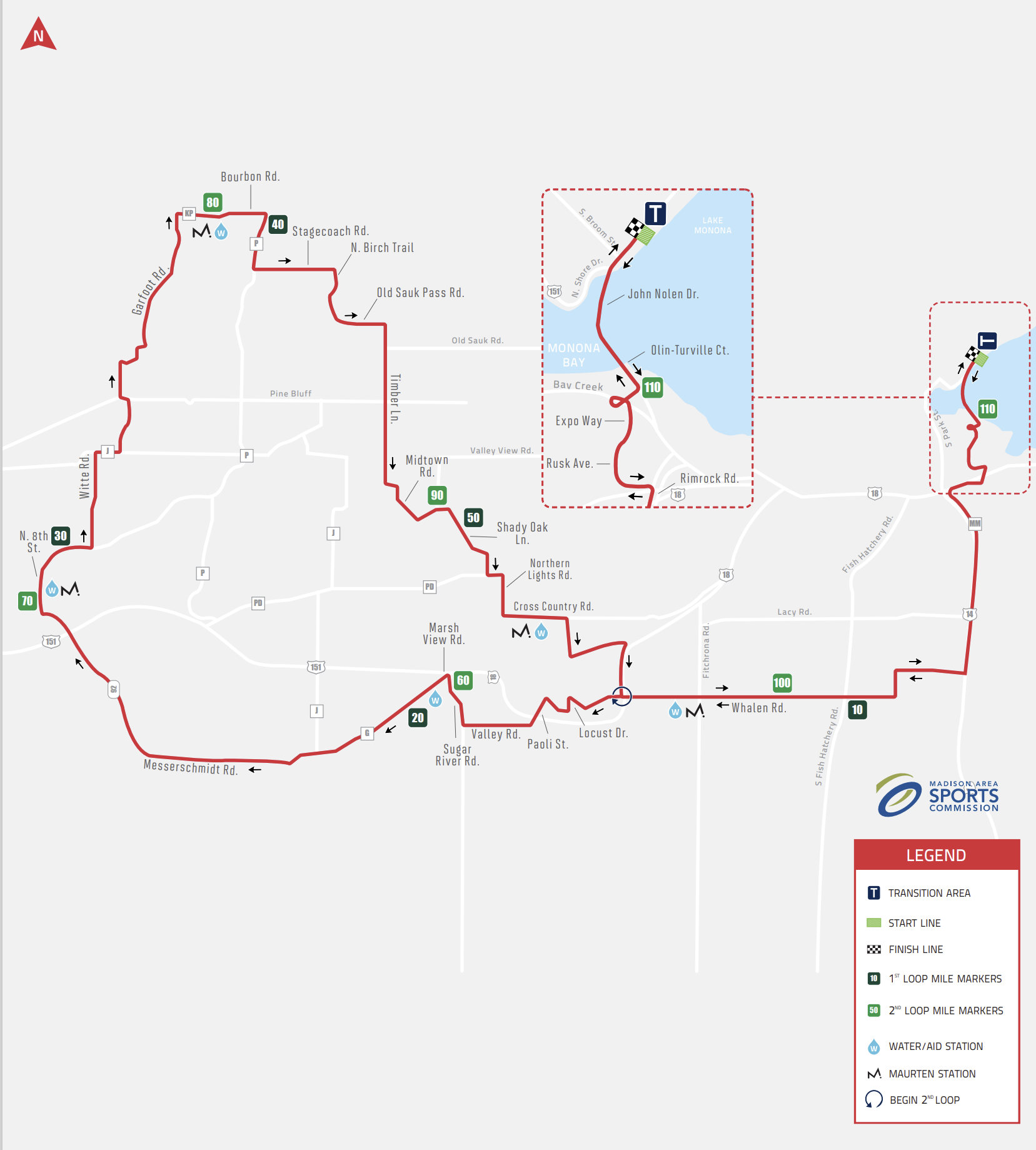
So, here is the bike course, but it’s hard to get much from an image. If you can, perhaps take some time to do a pre-ride of the course. There is a virtual option on the Ironman site.
So, a few things they don’t tell you. The first is that the initial ride is down the helix and out on a bike path. It will be rough and you might get stuck behind someone. Take it easy. It will be a long day and plenty of time to be fast. This initial portion is essentially getting you to the course.
The second thing is that you need to pay attention. I saw quite a few people who crashed at various portions of the race. There are a lot of reasons for this, from potholes, to speed check, to bike issues. I live in Wisconsin and frankly, I think the course is pretty fair. I don’t ride it and think, “man, this isn’t typical”. This race really requires that you be an adequate road biker and not just a person that trains inside. The more you intentionally train in hilly terrain with little ups and downs, the better you’ll be ready for this.
The third thing is to pace yourself in the context of the conditions. I said before that this course will force you to make decisions. On this day the course had a significant headwind going one direction. In doing so you need to understand that you’ll be under your typical pace, but make an intentional decision to stay within yourself and your abilities. Know that the turn is coming and you’ll get a tail wind that will feel great. The same is true for the hills. You’ll need to make decisions on which hills to power through and which to spin on. This was key for me and I felt really good about how I actually dialed back myself on a few of the hills. Know that if you go too strong there is a big risk to destroying the rest of the day. Don’t go more than you’ve trained for.
The fourth thing is nutrition. I can say that I underhydrated. Honestly, I think I should have taken a few water bottles and not just the race nutrition. I think I drank 5 water bottles over the time, but I think I was 2 – 3 less than I should have given my lack of need to use the bathroom. This particular day was not hot, so I think I dialed back when I should have maintained the plan.
You will find the race support awesome. There are tons of volunteers, cheering spectators, and crazy people on the three major hills. I found that encouraging.
I thankfully did the bike with no mechanical or tire issues. I did have extra tires and tire kit on my bike along the way. Be prepared to know how to change a tire. There are people on the course to help you, but I wouldn’t want to have to wait for them.
Transition 2
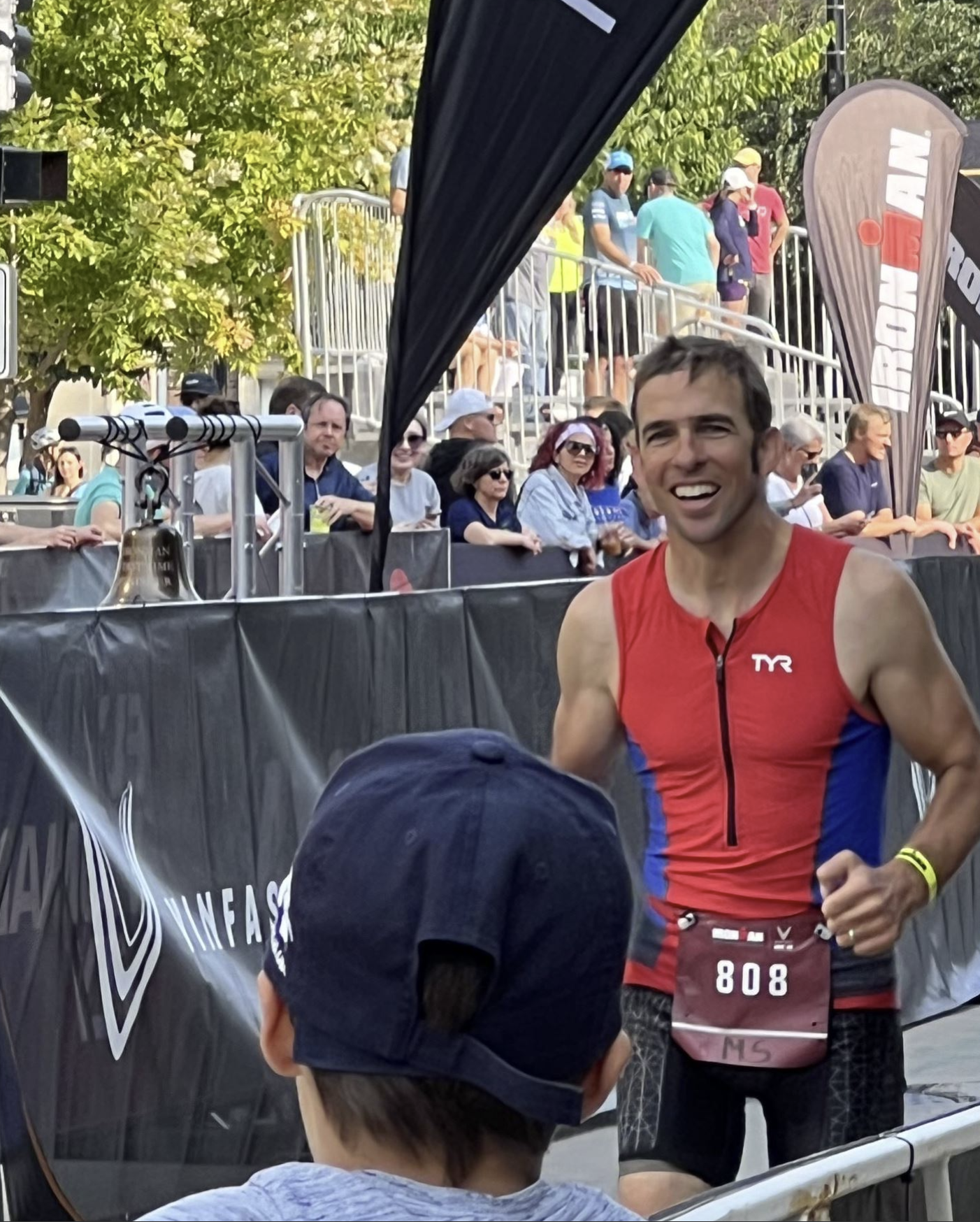
So, when you ride back to transition 2 you will see the Terrace on the shoreline and it is a welcome site. You’ll ride up the helix and they will take your bike from you. You’ll run inside to transition and be ushered into a room similar to T1. This is different, again, from typical triathlons where you change at your bike. In this case it is all inside. You’ll have a person get your bag and help you with anything you need. In my case I asked the person to help me with my shoes. I also put on my race number in transition with a belt clip. You’ll run out of transition and onto the course. In my case, this is where I first saw my family on the course.
The Run
I think this is the best run in Ironman, especially because of the crowd support. You’ll have a ton of people everywhere (unless it is torrential rain – one year) and great support. The run goes around the UW Wisconsin Madison campus, inclusive of State Street, the shoreline path, the Badger stadium, and the Capitol. You’ll essentially do each section four times, since you run there and back, there and back, then do it again.
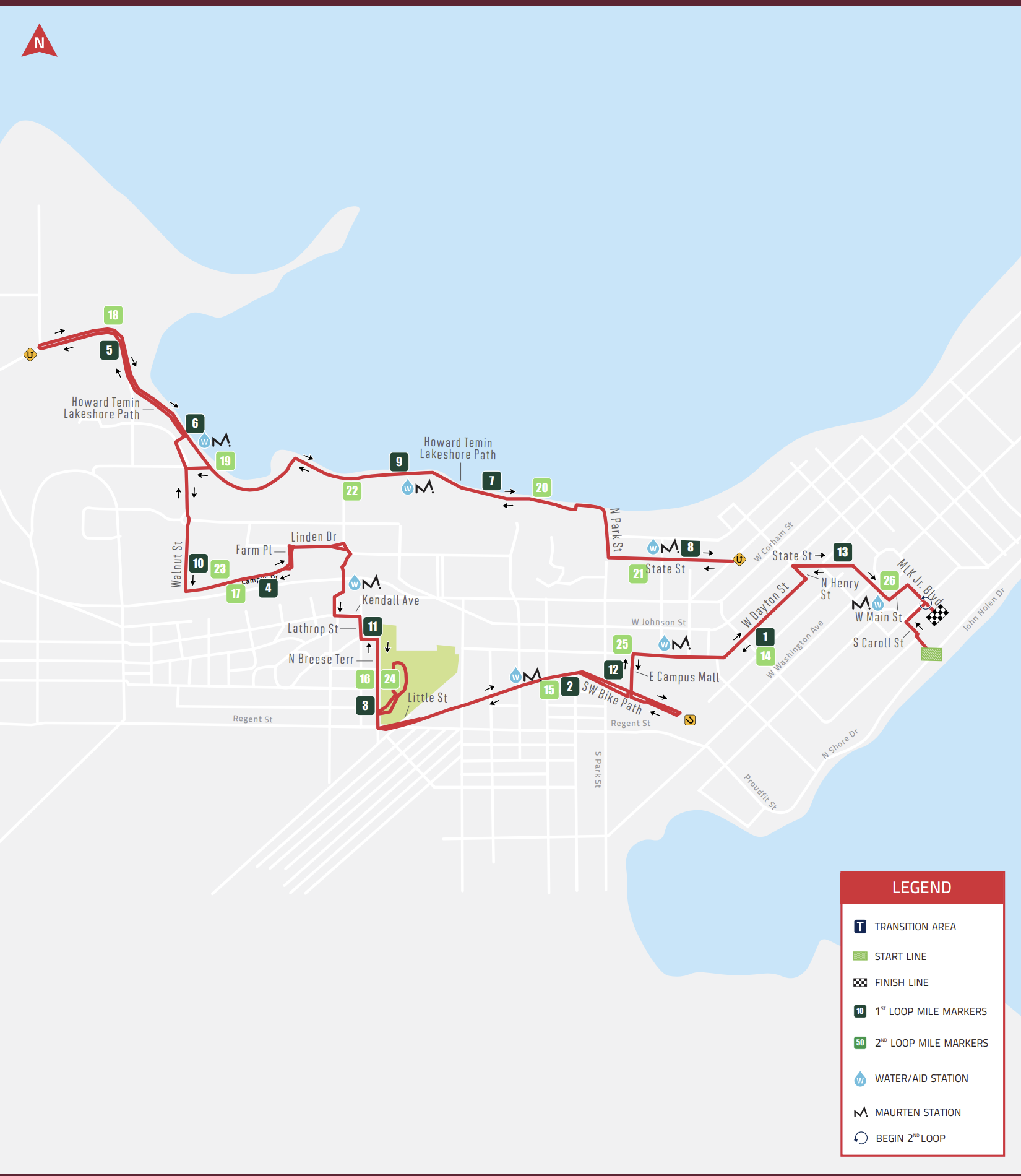
So, for me, the plan was to run between aid stations. The aid stations are positioned approximately a mile apart from each other. I was feeling some indigestion (that got worse as I went along) and I needed to force myself to run. The “breaking it into chunks” is really key to helping you keep the willpower to run. I had a pretty good first half of the run, then the second half slowed down quite a bit from where I wanted to be. I was running, but very slowly. The various aid station things were helpful, from chips, to pretzels, to soda, etc. As the day continued my indigestion got worse and I really needed to tough it out, but it was still doable. I remember at mile 13 telling my wife… “I am soooooo done”, but needed to do the second half of the marathon.
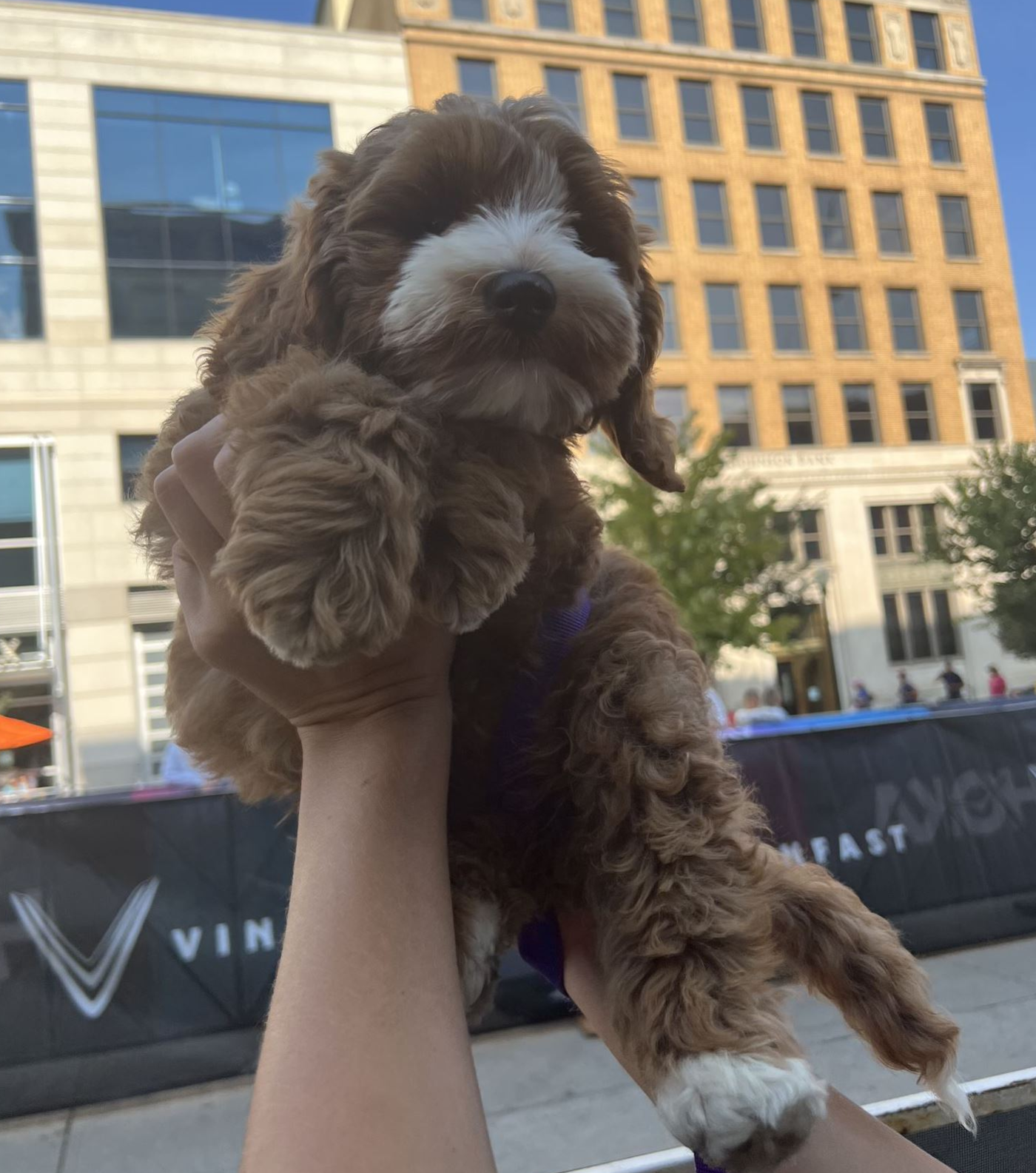
I have to say… that was a tough remaining 13 miles, but worth it. That part of the Ironman is where you really see people have to dig. You’ll see people walking, you’ll see people who you know aren’t going to finish, and you have the continous physical sense to stop. It’s then that the encouragement really means something. If you are a spectator, this is your time! My kids had been given a megaphone by one of the other spectators and were shouting encouragement. They also brought a puppy, which surprisingly was a huge hit among the racers. Apparently many people stopped to pet the puppy, then continue on with their run. Your participation matters.
A few other tips:
- Be watchful of your footing on the gravel path area… it can be a bit slippy
- Just-keep-moving-forward
- You are likely underhydrated… drink something
- Make sure to stop to pee
- Have fun when you can… you are in pain, but enjoy it
- The C26 guys say, “it’s not about who finishes the fastest, it’s about who slows down the least”. That’s 100% true in my experience. Very few of you are sprinting the marathon like it’s a 5k. Be prepared to manage a solid Zone 2 pace that always feels like Zone 3.
- Have a good speed walk through the transitions
The Finish
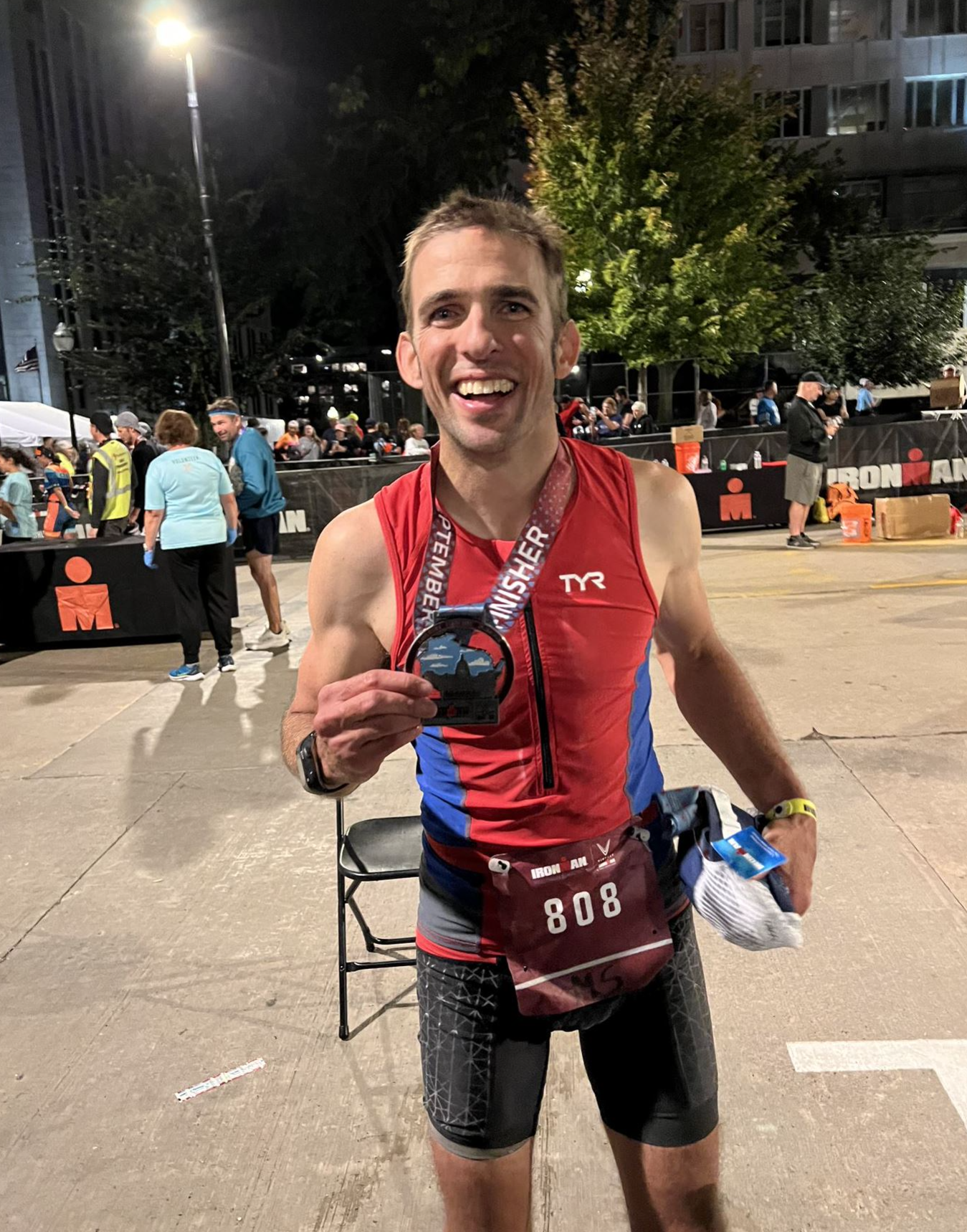
Man… there is nothing like it. I was so pumped that my family stayed the whole time and was there to support me at the end. Running down the finish line is just one of the coolest experiences. It makes all the training and commitment worth it.
This… moment… is… awesome.
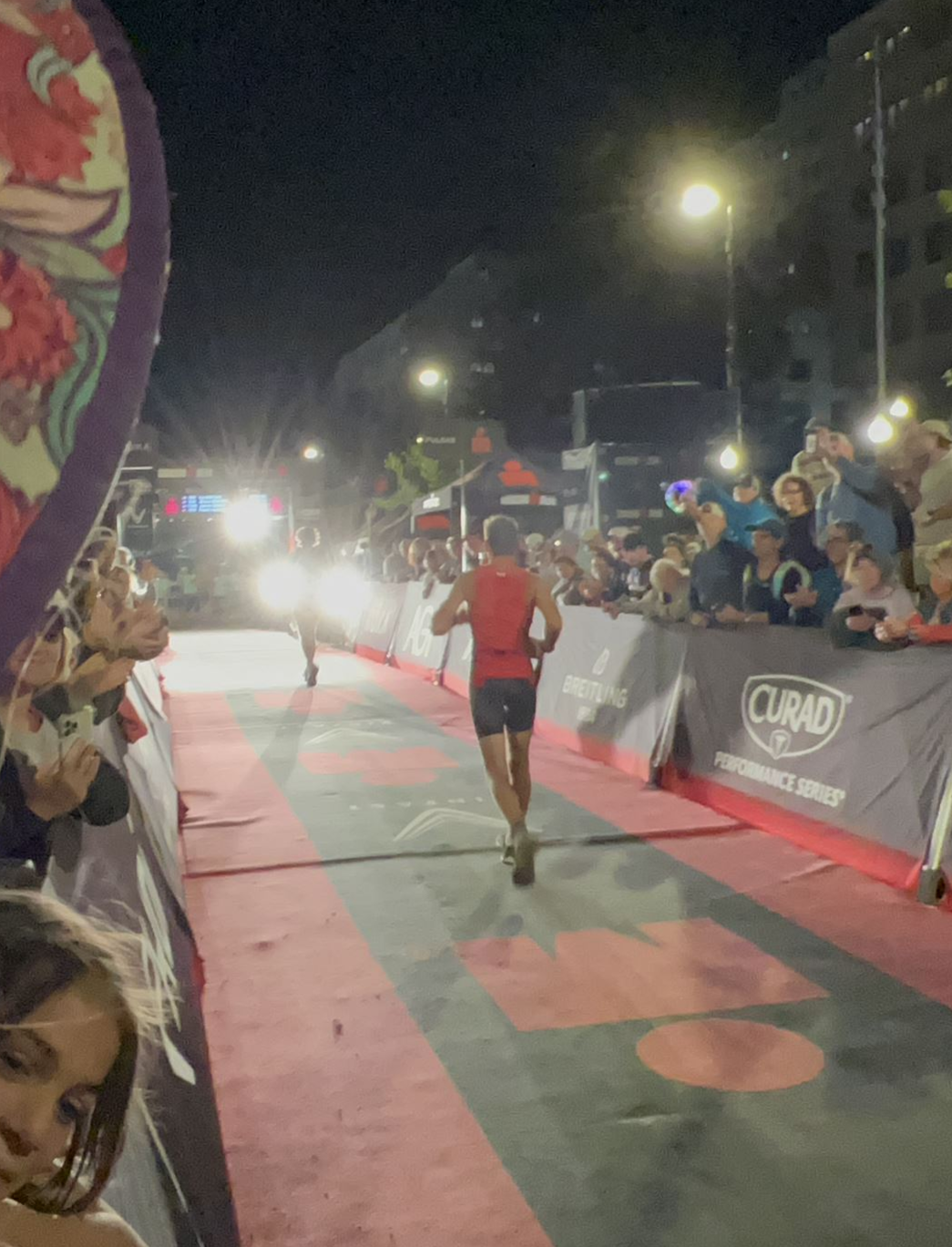
My favorite picture from right after the finish line:
Post-Finish
The first thing that will happen after you finish is a bunch of people will make sure you are alright. They’re like… “you good? you good?”. At that moment, you suddenly are done. After that, you’ll get your medal/hat/etc. and be shown where the food tent is. The food tent can be somewhat hit or miss, but check it out and see how you’re feeling. At this point I was mostly interested in finding my stuff and making my way back to the hotel.
To find your stuff there are a few stages. There will be a truck where they hand out your various bags to you. You’ll get the morning clothes, T1, and T2 bags back. The special needs bags are NOT returned to you, so this is just another reminder not to put anything valuable there. After that, you need to get your bike, which is one of the more annoying parts of this. At this point I started to feel a bit cold, as I had stopped running (of course) and was now discovering it was colder than I thought. To get your bike, you need to go back over to the Terrace and walk down the stairs (or take the elevator) to the bike area. Your bike will be there and you need to then carry it back up the stairs (or elevator) to the second level again. This is really annoying and the biggest logistical pain in the butt for someone who has just finished an Ironman. That said, it’s fine and was very doable.
After getting my stuff I draped it over my bike and walked back to the hotel. I basically just brought it all back up to my room, took a shower, and crashed. It was great, but at that point I started to realize a number of pains that I didn’t realize existed. That’s ok though… there’s nothing like a post-race pain because as Mellencamp says, “it hurt’s so good”.
The next day I was pretty sore, but also had a great feeling of relief and joy. I worked from the UW Madison campus, went to Mass, ate at a local place and made a day of it. Don’t be in a hurry to leave. Check it out, take in what the campus has to offer, and hopefully hang out with your family.
Final Thoughts
Ironman Wisconsin is just an epic course. The crowd support, the cool transition, the competitive difficulty level… all of it. I have now done Ironman Wisconsin three times and I’d gladly do it again. Yes, it might not be the fastest course, but it certainly is a fair course and one that tests you like an Ironman should. There are only a few things I’d change, such as the post-race food or the ease of getting your bike afterward. Other than that, I’ve always been impressed with the volunteers, the layout, and the easy access to the event itself.
So, that’s it… it was an epic adventure and huge thanks to my family for supporting me. What a great opportunity to do something difficult and to challenge me to continue doing difficult things across all phases of life. I saw a post the other day of “being the main character in your story”. The idea was, “you don’t watch movies about people that sit on the couch, don’t do anything, and just relax”… “you watch movies about main characters that take adventures and live incredible lives that inspire us.” My take… that can be through a lot of things… like being an awesome dad, husband, father, mother, friend, etc. It can also be through taking on epic activities. Be the main character in your story.
Nathan Lasnoski
 Nathan Lasnoski